When I first went into practice, I acquired an endocrinology practice. That’s the branch of medicine that deals with hormones. Many of the patients were women in menopause who were taking traditional hormone replacement therapy (HRT) with Premarin and Provera. That was the standard of care for menopausal women at that time. Patients often told me how much better they felt since starting these meds.
Premarin is what is called a conjugated estrogen, meaning a mixture of several types of estrogens. Provera is medroxyprogesterone, a laboratory-derived compound form of progesterone. Premarin is extracted from pregnant mares’ urine, thus “pre-mar-in.” But horse hormones don’t structurally match human estrogens. And Provera is a progesterone molecule that is altered in the chemistry lab so that it can be patented. Premarin is marketed as Prempro when it is combined with the synthetic progestin Provera. These prescription drugs are approved by the FDA.
The Study That Changed Everything
In 2002, results from the Women’s Health Initiative (WHI) study came out and scared everybody. News headlines screamed that post-menopausal women taking the combination of estrogen and progesterone HRT for menopause symptoms had an increased risk for breast cancer, heart disease, stroke, blood clots, and urinary incontinence. Although women using combined hormone therapy had a lower risk of fractures and colorectal cancer, these benefits did not outweigh the risks.
Those results caused the WHI trials to be “halted prematurely due to safety concerns.” Many physicians stopped prescribing these hormones and thus women stopped taking them. Interestingly, there was a sharp decline in breast cancer in 2003 after the WHI results were released in 2002 and women stopped taking HRT.
Many other studies since then said that maybe the results were not as bad as initially stated and HRT could again be prescribed as long as it was individualized. Today the FDA urges women who take HRT to take the lowest helpful dose for the shortest amount of time.
Bioidenticals Make their Debut

Bioidentical hormones were developed in 1982, but were not widely known until the actress Suzanne Somers came out in 2004 with her book, “The Sexy Years.”
Bio-identical hormones from compounding pharmacies are tailored to particular patients when doctors deem the FDA versions inappropriate for treatment. These hormones from compounding pharmacies are considerably less expensive than the FDA-approved versions.
Where did bioidentical hormones (BHRT) originally come from? From Dr.Jonathan Wright, a natural health pioneer. In 1982, he was challenged by a patient to figure out “natural hormones” because that’s what she wanted. So, he called up a pharmacist colleague who helped him put together “natural” or what is now known as “bioidentical” hormone prescriptions using the three main hormones women’s bodies make: estrone, estradiol, and estriol. They are found in specific ratios and levels in healthy premenopausal women.
When I learned about bioidentical hormones, they were referred to as “natural” hormones because they were made from yam or soy. Advocates promoted them as “chemical-free” and “safer” than the Premarin and Provera. Bioidentical hormones are identical in their molecular shape, makeup, and structure to hormones made in the human body. This is what makes bioidentical hormones the perfect “keys” to unlock the body’s receptor sites. In other words, it’s the shape of the molecule, not the source. When the shape matches nature’s expectations, there should be less side effects.
Natural or Not?
But they are actually chemically synthesized compounds; in other words, they are manufactured in a chemistry lab, which is not what one might think of when thinking of natural substances. These synthesized products are designed to match the three main estrogens a human woman’s body makes, which is why we call them bioidentical. They are offered both as branded, patented prescriptions approved by the Food & Drug Administration (FDA) and as individually made compounded prescriptions. For example, Bijuva is a patented combination of estradiol and progesterone. It lists similar risks and side-effects to Prempro, another patented drug and one very commonly written. Then there are preparations made at compounding pharmacies; these are individualized for each patient in their formulation and are not FDA approved.

The bottom line is that even bioidentical hormone medications that have plant sources as a starting material must be chemically modified in the laboratory before they are actually the hormones prescribed to patients. And the question remains as to whether they are safer or not.
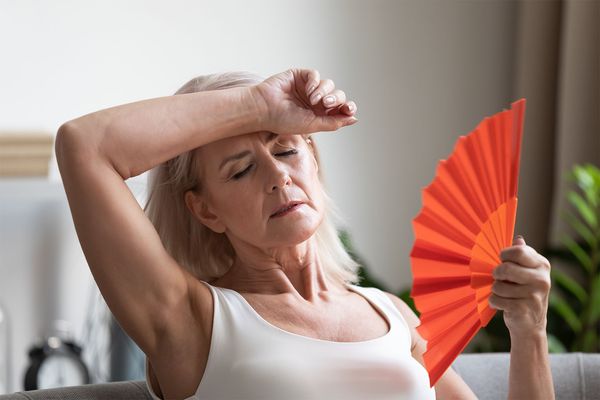
In my practice I felt that BHRT was safer than traditional HRT. I prescribed hormones for both men and women. That felt right for quite a while. When your hormones are balanced, it can shift how you see the world. When you do the things necessary to feel good physically, you also feel good mentally and emotionally and you experience life differently. I saw many people get great results. Women were very happy when they could sleep through the night again and get through the day without hot flashes.
Rethinking Bioidenticals
But over time I became uncomfortable with the idea of BHRT. The human body makes a variety of hormones in appropriate amounts and ratios – it is not the same as what is replaced with a prescription. And the body balances this array of hormones according to what it needs and what nature thinks is correct for that person, in a particular situation, at a particular time of day. Bioidenticals suppress the body’s ability to do this on its own. It’s kinda like if you’re always the passenger in a car, you never learn how to drive or learn your way around town. Or if you’re being carried around all the time, you lose the ability to walk, to function on your own.
Over time I started to wonder if BHRT is really as great and as safe as I was led to believe.

Meanwhile competitive forces were at work to limit BHRT. In September 2019, the FDA announced that compounded bioidentical hormones are a “public health concern” and that a “ban is likely.” The FDA then contracted with the National Academies of Sciences, Engineering, and Medicine (NASEM) to conduct a study and report on the risks associated with compounded hormone products. The report was released July 2, 2020. The NASEM recommended that the use of compound bioidentical hormone therapies should be limited to the small number of patients who cannot benefit from an FDA-approved hormone therapy product. In other words, compounded BHRT is only to be used when a patient is allergic to an ingredient in an FDA approved hormone product or when a patient requires a specific dosage not available for an FDA-approved product.
The powers that be disliked the lack of “standardization” that comes with the compounded ingredients – utilizing the recipe/prescription from the doctor and mixed together/prepared by the pharmacist in the pharmacy. What they are really saying here is that they do not like/trust pharmacists mixing up the individualized mixture/prescription for the patient.
In my opinion, if they ban compounded BHRT’s, we lose the ability to readily adjust the dose and to individualize. And did I mention that compound ones are usually cheaper – much cheaper – than the FDA-approved versions?
Truth is, all hormones can be marketed as “natural” or “plant-based” and many pharmaceutical companies are capitalizing on women’s desire for “natural” hormone replacement therapy by marketing proprietary hormone products.
A Better Way
Today after many years and much study, I’ve learned there is a better way. What’s that, you ask? That better way is to get your body to make its own hormones again, and this can be done. We do not need to use prescribed, chemically manipulated substances, regardless of their source.
And this business of hormone making is not just about making hormones. Menopausal hot flashes are a signal, a communication that the body needs help. If we try to use bioidentical hormones tuned to youthful levels along with lots of coffee or “energy drinks,” we are ignoring the real problem underneath.

We will lose our health and our stamina as things further breakdown and problems become more serious. Our American culture makes us think a doctor can magically just fix things for us. But there is no magic bullet to fix this. Not even BHRT.
What if we could step back from this ping-pong match about HRT versus BHRT and go at this from another direction? What if we could flip a magic switch and get the body to make just the right amount of hormones? Of course there is no “magic” switch, but there is a skill some of us have developed for recognizing patterns in the body. The patterns are like road signs pointing to the building blocks that individual bodies need to balance their own hormones.
Those building blocks come from nature’s own pharmacy – foods and herbal compounds. They support the body to make its own hormones, post-menopause, in the correct balance for the person, the time of day, and the situation. If you are tempted to dismiss the power of nature’s pharmacy, remember that roughly 70% of patented drugs are derived from herbs and other botanicals.
As the so-called father of medicine Hippocrates himself said, “Nature itself is the best physician.”
Let us help you with this truly natural approach.


 Bioidentical hormones were developed in 1982, but were not widely known until the actress Suzanne Somers came out in 2004 with her book, “The Sexy Years.”
 Meanwhile competitive forces were at work to limit BHRT. In September 2019, the FDA announced that compounded bioidentical hormones are a “public health concern” and that a “ban is likely.” The FDA then contracted with the National Academies of Sciences, Engineering, and Medicine (NASEM) to conduct a study and report on the risks associated with compounded hormone products. The report was released July 2, 2020. The NASEM recommended that the use of compound bioidentical hormone therapies should be limited to the small number of patients who cannot benefit from an FDA-approved hormone therapy product. In other words, compounded BHRT is only to be used when a patient is allergic to an ingredient in an FDA approved hormone product or when a patient requires a specific dosage not available for an FDA-approved product.
 We will lose our health and our stamina as things further breakdown and problems become more serious. Our American culture makes us think a doctor can magically just fix things for us. But there is no magic bullet to fix this. Not even BHRT.